
How is a Matrix video wellness call different from a Matrix in-home health assessment?
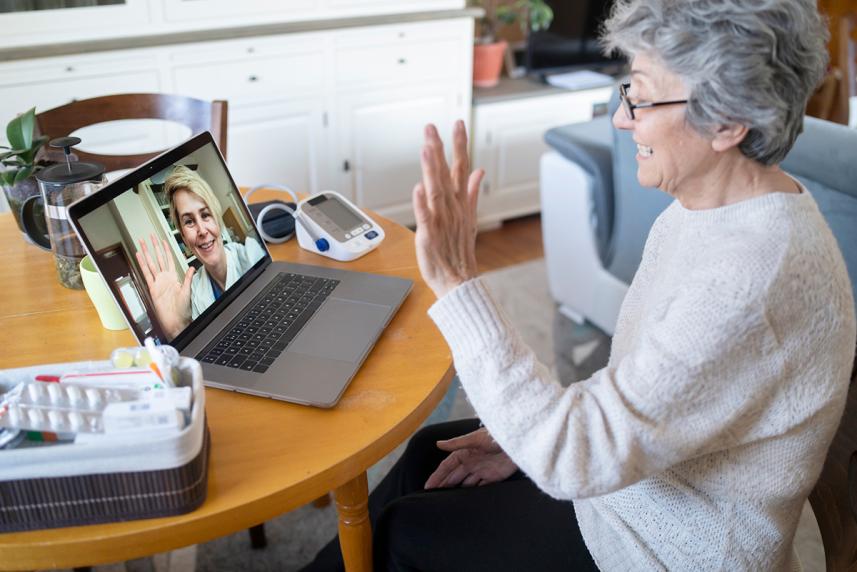
Your health plan may offer a virtual Matrix health assessment instead of an in-home health assessment — or both. Find out more about how a video wellness call works.
Instead of always having to show up at a doctor’s office for an appointment, you now have more choices — thanks to the rise of telehealth services. This is true for Matrix in-home health and wellness assessments too. A Matrix clinician can come to your home — or join you over a video wellness call.
If you’ve never used a telehealth option before, you may be a little unsure of what to expect and how it will go. Here’s what you need to know about how virtual and in-home health assessments differ — and the many things they have in common.
What’s different: You’ll be connected via a screen
A virtual visit requires you to connect to your health care provider through a secure platform on your phone, tablet, or computer. “With a Matrix video wellness call, you’ll be connected to a clinician who will take care of you,” says Pamela Eliason. She is a board-certified family nurse practitioner and a team lead for Matrix Medical Network in North Carolina.
These calls are similar to how you may talk to family members on a device such as Alexa or on FaceTime or Google Meet. But these calls are secure, so your medical information remains private. The fact that you’re speaking over a screen may feel new, but you may quickly get used to it, especially with the clinician guiding your visit.
Have questions about your health? A Matrix virtual health and wellness assessment is a great time to get answers from a licensed clinician — plus, it’s part of your plan! Call 877-302-3672 877-302-3672 to schedule or book online.
What’s similar: You can still chat freely
Your Matrix clinician wants to hear your concerns and questions, whether you’re seeing someone in your home or during a virtual appointment. So, it’s essential to always speak up about your health concerns.
“We’ll do an interview with the member making sure that we touch all the bases, asking about body systems and talking about issues and what’s going on with the member,” says Eliason.
These conversations with your provider are an essential way to make a diagnosis, screen for diseases, talk about healthy lifestyle habits, and discuss disease management and treatment plans. “We can get a lot of information about a person’s health and well-being just by talking to them,” she says.
What’s different: You may help your Matrix provider capture your vital signs
During an in-home health assessment, your clinician would conduct a physical exam by taking your vital signs. That can include listening to your heart and lungs, taking your blood pressure, and checking your blood oxygen level.
When you’re not in the same room as the person who is examining you, they can’t physically touch you. But there are effective ways to work around this. Eliason says that if you have your own minor medical equipment, such as a blood pressure cuff or pulse oximeter, you can take your own blood pressure and oxygen level readings for the clinician.
If virtual visits suit your needs, you might consider purchasing these devices. This is especially true if your doctor has told you that your blood pressure or blood oxygen levels are a particular concern. Eliason says your health plan or local drugstore may offer coupons for these devices. It’s not required for you to have your own, but it can make a video wellness call even more effective.
What’s similar: You’ll review your medications
Whether you see your Matrix clinician in person or virtually, you’ll go over all the prescriptions and over-the-counter medications you take. “During a video wellness call, you can either read off the medicine bottles aloud or hold them up to the camera on your phone or computer for the NP to read and capture the information”, says Eliason.
What’s similar: You can’t get certain tests on the spot
Sometimes, your health care practitioner needs more information to determine what’s going on with your health. That may involve blood tests or imaging scans, and those can’t be done on a virtual call. During a Matrix in-home health assessment, the clinician may also recommend that you follow up with your doctor.
If that’s the case, your Matrix clinician can help you figure out the best way to schedule these follow-up appointments. If you’re experiencing urgent symptoms, such as shortness of breath or chest pain, you should never rely on a video wellness call. You should call 911 immediately.

An even healthier you starts here
Your no-cost in-home health visit helps you stay a step ahead of diabetes, kidney problems and more.
What’s similar: Your Matrix clinician can still make a diagnosis
Even though they can’t physically touch you in a virtual visit, they can still see you over the camera. If you have a health issue that can be seen visually, you can show your NP on the video call. That could be something like a spot on your arm, a sore on your foot, or a rash on your leg.
It may be a little harder to get an accurate read on health problems that aren’t visible. But discussing your symptoms and concerns openly can really help your clinician make an accurate diagnosis.